The Legal CRM modernization playbook

Transform client development with technology built for legal

Law firm CRM modernization isn't a technology problem. It's a growth problem.

Firms aren’t struggling because they lack data. They’re struggling because their intelligence is fragmented, hard to trust, and difficult to use in the moments that matter most: when partners are deciding who to call, which opportunity to pursue, or how to deepen a client relationship.

The Legal CRM modernization playbook is a series of perspectives on what it actually takes to modernize client development in a law firm without disruption, over-customization, or adoption failure.

Inline Image

CRM adoption doesn’t fail because of people. It fails because of design.

Most law firm CRMs were never designed for how lawyers actually work. They require too much manual effort, live outside of daily workflows, and ask partners to “update the system” without giving them anything meaningful in return.

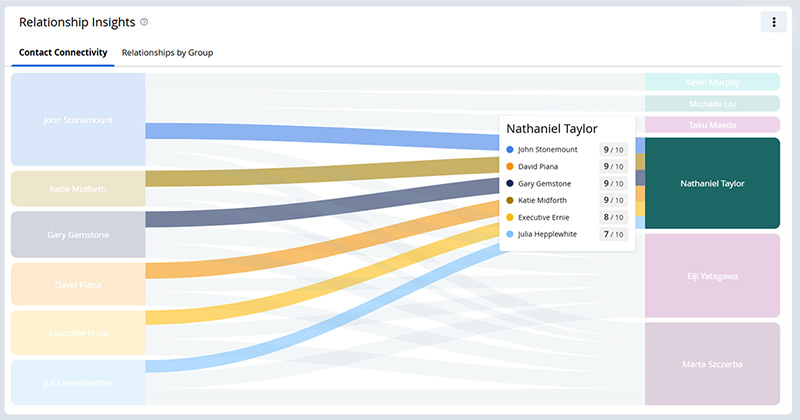
Modern CRM adoption happens when relationship intelligence is automatic, embedded, and immediately useful—surfacing insights inside email, meetings, and real client interactions.

CRM should be evaluated as a strategic growth engine, not an IT system.

When CRM is positioned as infrastructure, it gets scoped, priced, and judged like software. When it’s positioned as a growth engine, the conversation shifts entirely.

The firms seeing real returns are using CRM to expose whitespace, strengthen key accounts, and coordinate firmwide client development to turn disconnected data into measurable growth outcomes.

Inline Image

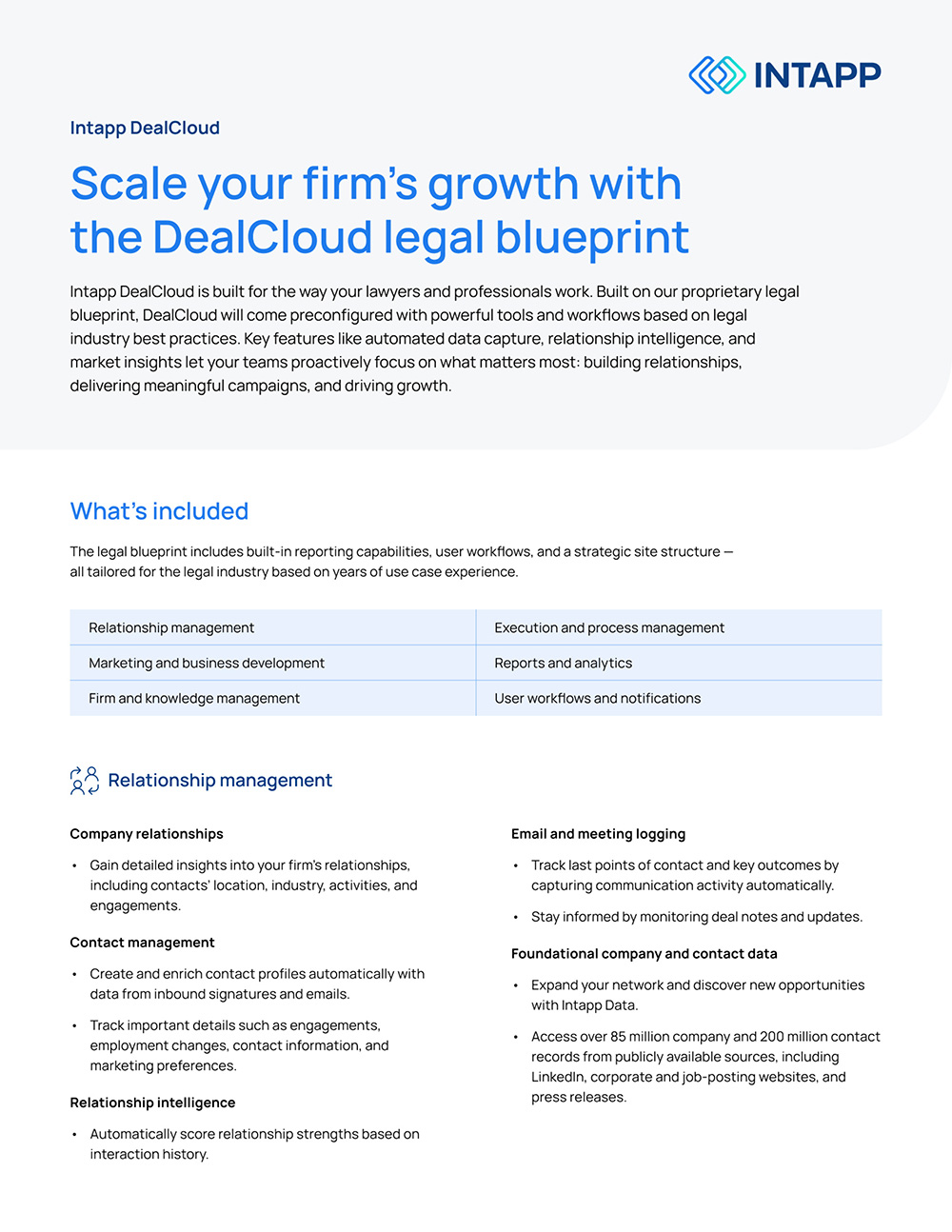
CRM for Legal Blueprint

Successful CRM transformation starts with a blueprint, not a blank page.

The biggest risk in CRM modernization isn’t moving too fast. It’s starting from scratch.

Law firms that modernize successfully don’t “build a CRM.” They activate a proven, legal-specific blueprint that reflects how client development actually works, accelerates time to value, and avoids years of rework. Modernization works when data structures, workflows, and governance are ready before users ever log in.

Put the blueprint into practice

Adoption comes from relevance, not enforcement

Adoption comes from relevance, not enforcement

ROI comes from activation intelligence, not collecting data

ROI comes from activation intelligence, not collecting data

Speed comes from proven models, not custom builds

Speed comes from proven models, not custom builds

Download the legal blueprint

Intapp DealCloud for legal

If your firm is evaluating CRM modernization, or questioning whether your current system can actually support growth, the next step is clarity.

Frequently asked questions

CRM modernization for law firms means moving beyond legacy or generic systems that store data but don’t support modern client development. A modern legal CRM connects relationship data, experience, activity, and signals into a single system of client intelligence that lawyers and BD teams can actually use in their day-to-day work.

Most law firm CRMs fail because they weren’t designed for modern legal workflows. They require manual data entry, live outside of daily tools like email, and provide little immediate value in return. Adoption improves when intelligence is captured automatically and surfaces insights at the moment they’re needed.

When CRM is treated as infrastructure, success is measured by deployment, not outcomes. Firms that evaluate CRM as a growth engine focus on how it helps expose whitespace, strengthen key accounts, and coordinate firmwide business development. That shift changes how value and ROI are measured.

The biggest risk is starting from scratch. Custom-built CRM projects often lead to long timelines, rework, and low adoption. Firms reduce risk by using proven, legal-specific blueprints that reflect how client development actually works.