Our ongoing series on the principles underlying our conviction that Firm AI will drive business success for professional and financial services going forward continues this week with Principle 3: Firm AI is built for the people running the firm. Here we discuss how Firm AI equips the people who are responsible for running a firm (different from running a company as we discussed in Principle 1), with a direct and unbiased view into how the firm is performing across all critical business criteria.
Principle 3: Firm AI is built for the people running the firm
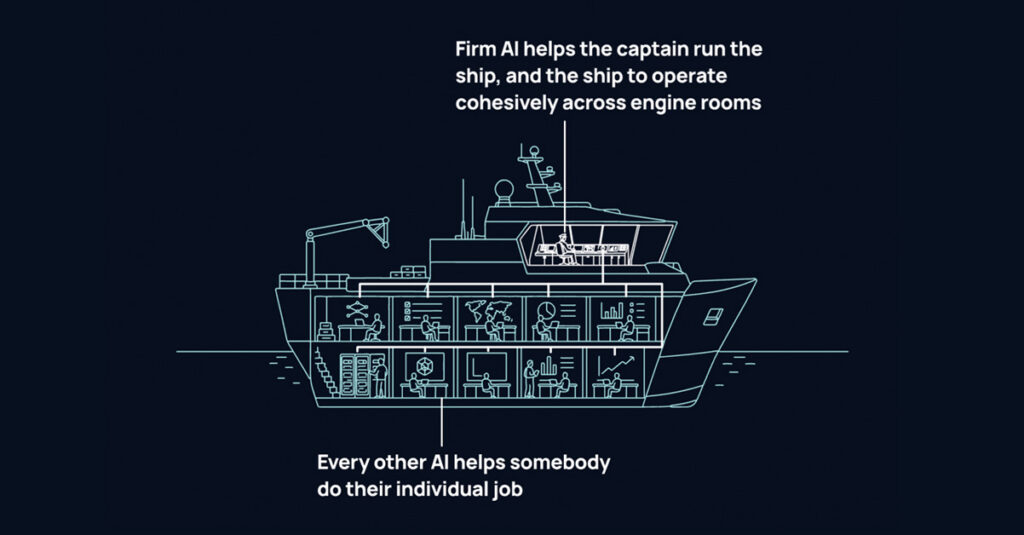
Every other category of AI helps somebody do their job. Firm AI is the first built to help the firm’s leaders and partners run the firm itself.
Today’s AI is built for the professional at their desk: the associate reviewing the contract, the accountant generating a tax return, the analyst building a financial model. Practice AI makes that professional faster, and that is worth doing. But it leaves untouched the people whose job is not the work but the firm: the managing partner and CEO, the COO, the heads of practice, industry, and strategy.
Theirs is one of the hardest jobs in business. They are accountable for the whole firm, its growth, margin, returns, risk, and direction, but cannot run it the way a CEO runs a company. A partnership cannot be commanded. A firm leader governs by influence: herding partners who each own a piece of the firm, steering without orders, building consensus for moves a corporate executive would simply mandate. No AI has ever been built for that job.
Firm AI gives the leader a direct view of the firm. Today a managing partner learns how the firm is doing by asking the people below him, and gets back an answer that is slow, partial, and shaped by whoever assembled it. Firm AI sits on top of everything at once: the firm’s memory, its matter and deal history, its pipeline, its conflicts and risk posture — all governed and tied to the same institutional facts. A managing partner who asks how the firm is performing in middle-market private equity this quarter gets a full-firm answer that is auditable. She no longer has to receive that filtered through multiple individuals. A GP who asks which LPs are most likely to anchor the next raise gets a ranked list that respects side-letter and MNPI boundaries, in seconds. A consulting practice leader who asks which sectors are under-resourced against pipeline gets a view across every engagement, methodology, and partner’s calendar — from the firm’s own systems, not approximated.
Firm AI is a completely new paradigm and interface for firm leadership to not only understand their business better, but also manage it better.
It lets the leader steer without commanding. Because a partnership runs on influence, the most powerful thing a leader can do is make the firm’s preferred way the easy way. Firm AI encodes the firm’s chosen approach into the agents and playbooks partners already use, surfaces who is working with the grain of the firm and who is drifting, and turns a directive that would have been resented into a default that is simply there.
Next Up
Next week we’ll talk about Principle 4: Firm AI is built for firm growth. Every other AI is built for individual utility.
In the meantime, the full argument is in the blueprint: Mind your business. Not just your practice.